Many families struggle to understand whether their child’s behavior is typical or a sign of something deeper like ADHD in children or childhood anxiety. At Adena Health, Cassie Rice, DO, pediatrician, works closely with families to sort through these questions and support both children and parents with compassionate, practical guidance.
Drawing from her own upbringing in southeastern Ohio and her years of pediatric experience, Dr. Rice brings a down-to-earth approach to helping families navigate symptoms of ADHD and anxiety in children.
How do you tell typical behavior from ADHD or anxiety?
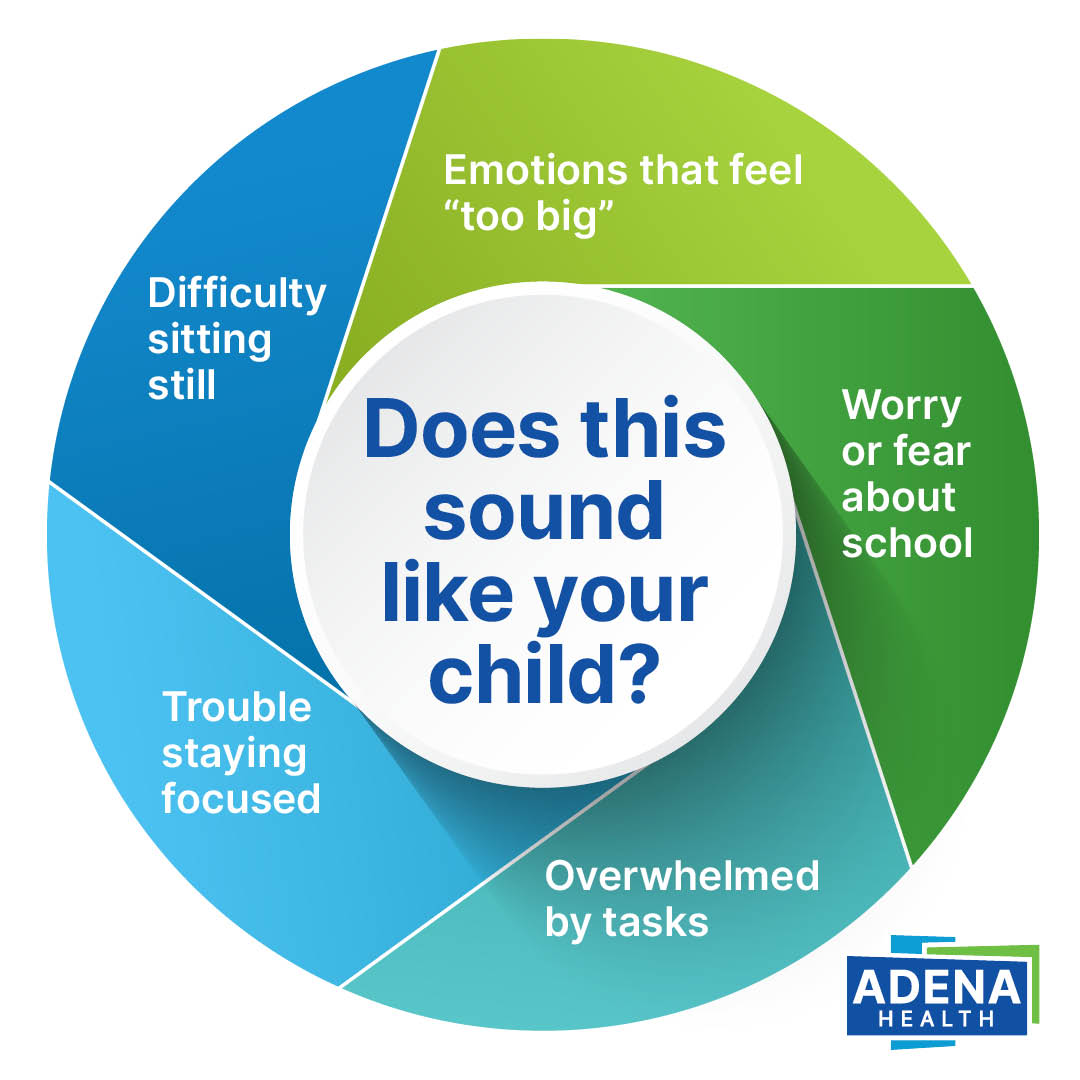
According to Dr. Rice, this can be hard as many behaviors overlap with what kids naturally do: move a lot, get distracted, have big emotions, or worry. The difference lies in patterns, persistence, and impact.
ADHD and anxiety become concerns when these behaviors:
Occur consistently, not just occasionally.
Appear in multiple settings — school, home, sports, and social environments.
Persist for six months or longer.
Begin to disrupt learning, relationships, or daily functioning.
She explains that ADHD tends to show up between ages 6 and 12 and is often first noticed by teachers. Children typically show ADHD in three ways:
Hyperactive/impulsive — difficulty sitting still, constant movement.
Inattentive — drifting off, trouble focusing, easily distracted.
Combined — a mix of hyperactivity and inattention (the most common).
Anxiety can often show up alongside ADHD and is one of the most common coexisting conditions in children. “Sometimes ADHD and anxiety are like best friends,” Dr. Rice says. “If one isn’t well controlled, it can feed the other.”
For example, a child with ADHD may struggle to study for a spelling test. When test day arrives, anxiety kicks in. These two conditions often work together, making professional support incredibly valuable.
Finding the right support for your child
If your child is distracted, anxious, or struggling in school, Adena Pediatrics is here to support you and your family. Parents often fear medication is the only option — but Dr. Rice reassures them there are multiple treatments available.
Below are some of the most common treatment options:
1. Behavioral strategies and therapy
Adena offers pediatric behavioral health therapists who help children learn skills to manage their emotions and feelings.
2. Medication
Medications can be helpful when symptoms significantly impact school, home, or social life. But finding the right medication can take time. “There is no one-size-fits-all,” Dr. Rice notes. “Every child’s brain is different.”
3. Specialist support
If a child does not respond well after trying several options, there are other resources that can offer support. Adena Pediatrics partners closely with both Cristen Collins, MD, Child and Adolescent Psychiatrist at Adena Counseling Center, and experts at Nationwide Children’s Hospital.
“These partnerships allow us to get children help much faster than the nine- to twelve-month wait times I used to see,” Dr. Rice says. “Sometimes families get help within weeks.”
Supporting your child at home: what parents can do
Dr. Rice emphasizes that families can make meaningful progress with simple, consistent changes at home for children with ADHD or anxiety. She uses many of these strategies with her own children:
Healthy sleep routines
A predictable bedtime helps reduce hyperactivity, improve focus, and regulate emotions.
Cleaning up the diet
Diet isn’t a cure, but it can make a big difference. Replace processed foods and sugary options with healthier, natural food choices.
Daily physical activity
Ensure children are getting daily physical activity to support focus and reduce anxiety.
Structure and predictability
Kids with ADHD and anxiety often thrive when expectations are clear. A structured day reduces stress and helps children feel more in control.
Breaking tasks into smaller steps
A large chore can overwhelm a child. Using timers and setting small goals to achieve a larger goal can help children build focus, independence, and confidence while also reducing anxiety.
Helping kids thrive together
Whether your child is showing early signs of inattention, struggling with anxiety, or having difficulty in school, Adena Pediatrics is here to help. To schedule an appointment, call 740-779-4300 or visit Adena.org/Pediatrics.
“You don’t have to navigate this alone,” Dr. Rice says. “Our job is to support families, find answers, and help kids become the best version of themselves.”
Meet Dr. Cassie Rice
Dr. Cassie Rice is a pediatrician with more than 10 years of experience who sees patients in Chillicothe and Jackson. As an only child in a hardworking Appalachian family, she learned early the values of resilience, grit, and strong community. For Dr. Rice and her family, faith comes first. She brings that same heart for God into her daily work, offering support to families with compassion and respect.
She and her husband raise their two boys on a small farm in southeastern Ohio. They’re deeply rooted in the Jackson community, where you’ll often find them at local football games enjoying the marching band performances or participating in youth sports.
“We want families to know that I’m not just their doctor — I’m also their neighbor,” she says.